AI Financial Forecasting: Cash Flow
Why seasonality and payment behavior matter in cash flow forecasts. We cover starting simple, how to check a forecast against actuals, and its limits.
This article is not legal or financial advice. Cash flow forecasting looks for an answer to 'how much money will we have in the bank in the coming weeks?' Before talking about AI, the question to ask is simpler: is the data you have enough to answer it?
Three inputs
- Expected receipts: open invoices and their due dates. If a customer does not pay on time, the due date misleads; past payment delay gives a more realistic date.
- Expected payments: outflows with a known calendar, such as supplier due dates, salaries, taxes and rent.
- Seasonality: in some periods of the year sales and collections rise or fall systematically; holidays, campaigns and month-end effects belong here.
Start simple
A first forecast does not need a complex model. Set up a simple baseline such as 'same period last year' or the average of the last few periods; a more advanced method is worth it only if it beats that baseline consistently. When comparing monthly totals, account for the difference in working days: February and a month with a public holiday are not the same length.
Checking the forecast
- Compare the forecast with actuals every period and record the deviation.
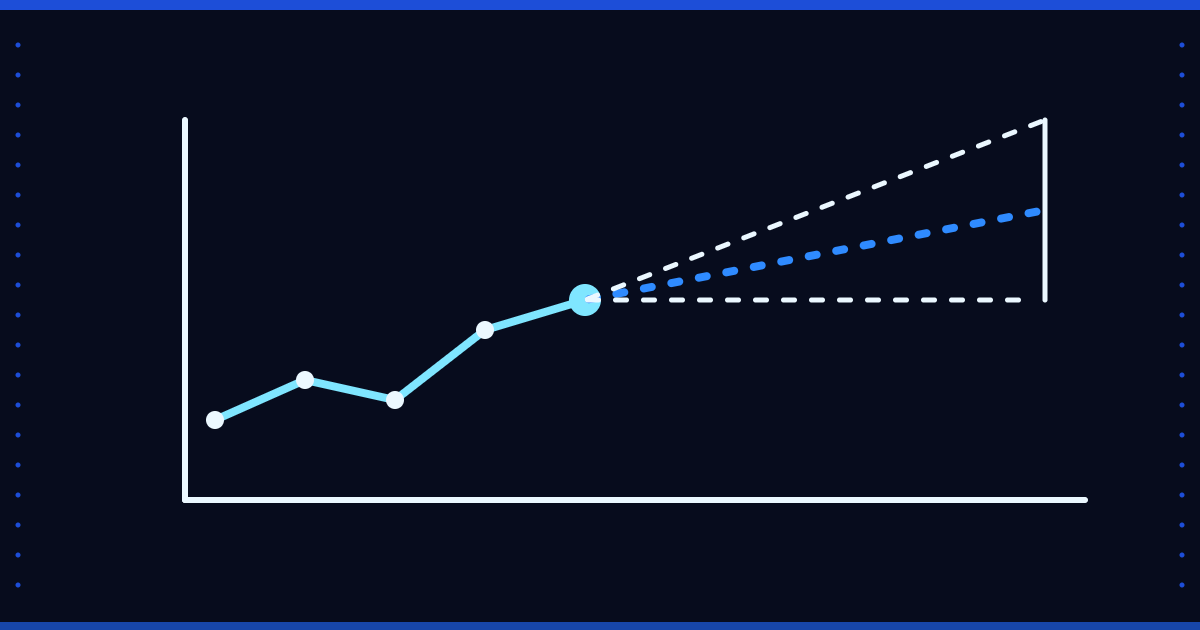
- Give a range instead of a single number (optimistic and pessimistic scenario).
- Write down the reason for a large deviation: a customer delay, or a one-off payment?
- Present the forecast to decision makers with a 'not certain' warning.
A fictional example
The following example is fictional. A distribution company expects 100 units of collections at month end based on the due dates of open invoices. After seeing that customers have paid 10 days late on average in the past, it moves part of the collections to the next month. The result is a more cautious plan for the month-end cash position.
Where Floemdata stands
The Gold layer of Floemdata Analytics contains receivables aging and customer payment behavior tables (with fields such as average delay); these can be inputs to a cash flow forecast. AI-based cash flow forecasting, however, is not a verified product feature; it is on the roadmap (not verified). Results on test data do not show customer reality.
To get started, put the last six months of collections next to their due and actual dates and calculate the average delay. Questions: info@floemdata.com.