EU AI Act in 2026: What Applies and What Moved
The EU AI Act's high-risk obligations were postponed. We outline the four risk levels and what applies in 2026, with dates.
The line 'the EU AI Act applies in full from August 2026' is no longer accurate. The Digital Omnibus postponed the obligations for high-risk systems. This article summarizes the current timeline. This text is not legal advice; consult a lawyer about your situation.
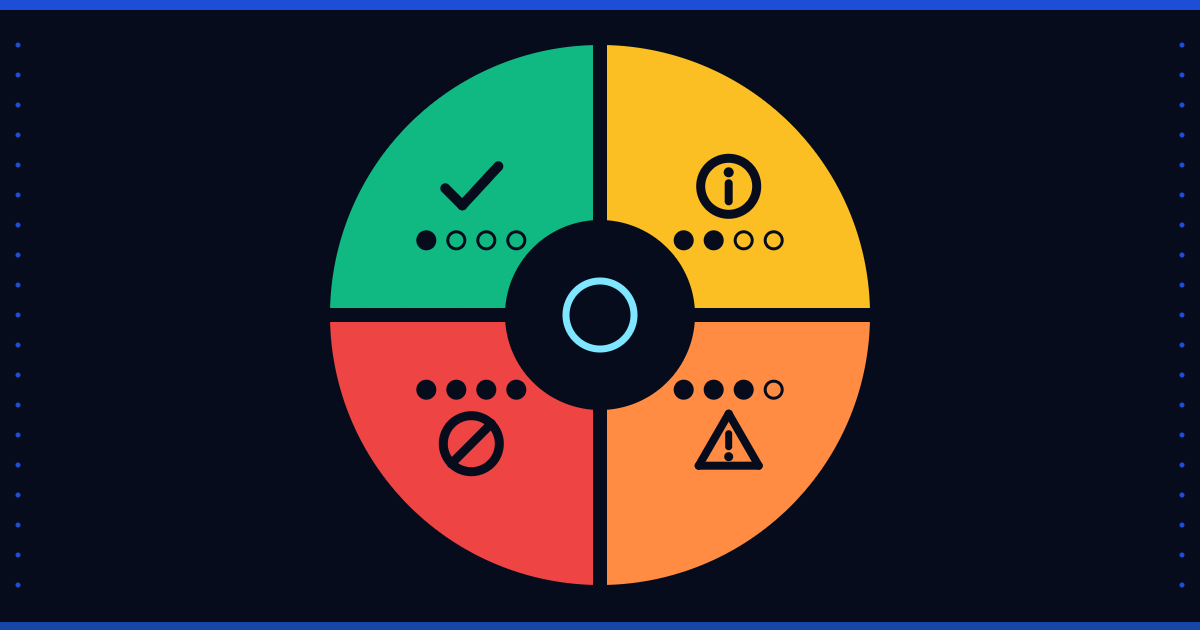
The four risk levels
The European Commission names the levels as: unacceptable risk, high risk, limited risk, and minimal or no risk.
- Unacceptable risk: prohibited practices such as harmful manipulation, social scoring and certain biometric uses. The prohibitions (Article 5) have applied since February 2025.
- High risk: systems that pose serious risks to health, safety or fundamental rights, such as hiring tools, scoring in education and credit decisions. Obligations were postponed to 2 December 2027, and to 2 August 2028 for systems embedded in regulated products.
- Limited risk (transparency): cases such as chatbots, generative AI content and deepfakes, where users must be informed. The application date is August 2026.
- Minimal or no risk: for example video games and spam filters; no specific obligations.
What to know about 2026
- The Digital Omnibus (the AI Act Service Desk pages for Articles 5 and 50 link to it at OJ:L_202601744; we derived the number Regulation (EU) 2026/1744 from that address and it is not verified; the pages give no official publication or entry-into-force date, and EUR-Lex was not accessible) added two new points to Article 5, prohibiting the generation of non-consensual intimate imagery and of child sexual abuse material; they apply from 2 December 2026 (AI Act Service Desk, Article 5, points (ba) and (bb)). These prohibitions are limited by Article 5(1a) and 5(1b): placing such a system on the market is prohibited only where (i) generating this material is its intended purpose, or (ii) the system's design makes such generation a reasonably foreseeable and reproducible outcome and the system lacks adequate technical safeguards; use is prohibited only where the deployer uses the system for that purpose; and a change that does not increase the exposure of depicted intimate parts or alter the nature of depicted sexually explicit activities does not count as manipulation (AI Act Service Desk, Article 5).
- Rules for general-purpose AI models have applied since 2 August 2025 (Gibson Dunn).
- Transparency obligations (Article 50) start on 2 August 2026; news sources mention a 2 December 2026 transition rule for the labeling of AI-generated content (not verified; we could not confirm it in the official text).
- High-risk systems: 2 December 2027 (Annex III) and 2 August 2028 (Annex I).
What this means for businesses in Turkey
Under Article 2(1), the Act covers providers that place AI systems or general-purpose models on the EU market, whether or not they are established in the EU, and also providers and deployers established outside the EU where the output of the AI system is used in the Union (Article 2(1)(a) and (c), European Commission AI Act Service Desk). Clarify with a lawyer whether your own situation falls within that scope. A practical first step: list the AI systems you use or offer, and place each one in one of the four levels above.
Sources: European Commission, AI Act Service Desk, Gibson Dunn.