When Do You Need ETL? A Decision Guide
ETL moves data from several sources into a warehouse and transforms it. We explain when it is needed, when it is extra burden, and how it differs from ELT.
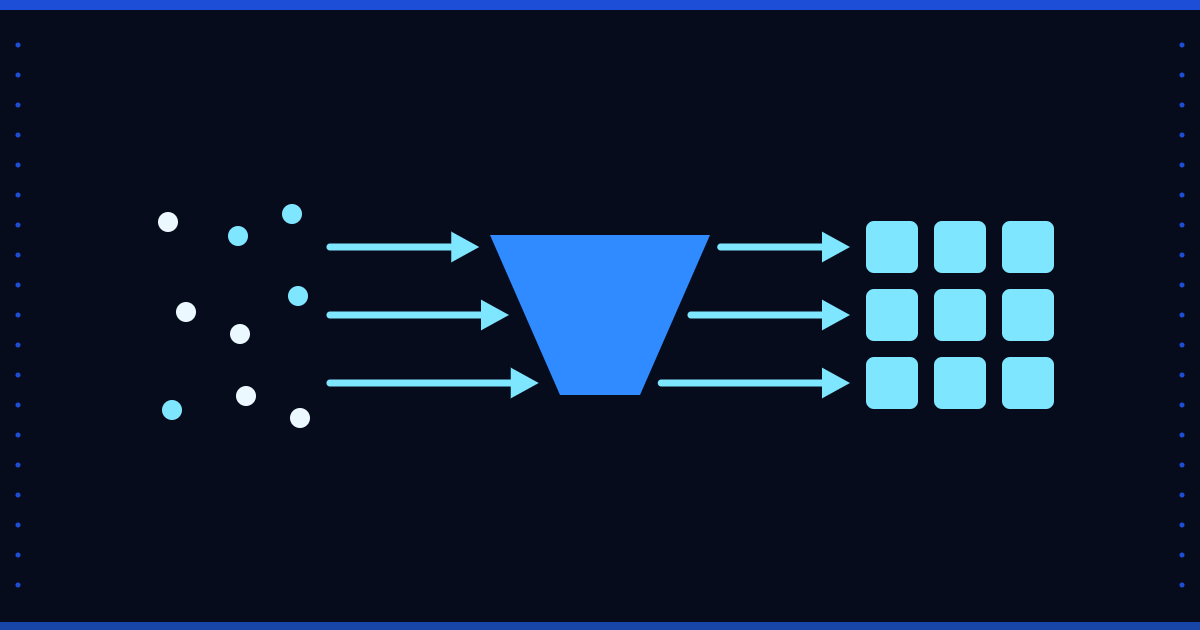
The detailed answer to 'What is ETL?' sits in a separate article; a short summary follows. The main subject here is a decision: do you need to build ETL?
ETL in short
ETL extracts data from a source, transforms it and loads it into a target. In ELT the order changes: raw data is loaded into the target first and the transformation happens there.
When ETL is needed
- Data comes from several sources (ERP, e-commerce, CRM) and has to be combined in one table.
- You do not want to run heavy reporting queries on the live ERP database.
- You need to keep history, track changes or prove where a number came from.
- Several reports and teams use the same data; definitions should live in one place.
When ETL is unnecessary
- One source, one report, a few hundred rows: a table or a ready-made report may be enough.
- The source system's own report meets the need, and there is no question that justifies extra maintenance.
- The data is needed for a one-off analysis; exporting it once is enough instead of building a permanent pipeline.
Three questions to decide
- How many sources and how many reports are there?
- Do I need to show the past state or the source of a number?
- When the pipeline breaks, who will notice and who will fix it?
How Floemdata does it
In Floemdata Analytics, the data pipeline runs SELECT queries against SAP Business One with a read-only user; the extraction queries do no aggregation or calculation (except the header-line join). Transformation happens in the warehouse, in layers. This is closer to an ELT arrangement. SAP Business One is the only source that has run on real data; other sources have not yet been tried against a real source.
In short: if you have several sources and a need for history and evidence, build an ETL or ELT pipeline; if not, try the simplest solution first. Questions: info@floemdata.com.